Protecting biodiversity is not only about saving wildlife. It is about protecting the ecological systems that sustain food, water, climate resilience, livelihoods and human wellbeing.
Across the world, biodiversity is declining at an alarming rate. Forests are being fragmented, wetlands degraded, wildlife habitats converted, and ecosystems placed under increasing pressure from agricultural expansion, extractive activities, infrastructure development, pollution, overexploitation and climate change.
The consequences extend far beyond the disappearance of individual species.
Every species exists within a wider ecological system. Plants, animals, fungi and microorganisms interact to pollinate crops, disperse seeds, regenerate forests, regulate pests, maintain soils, cycle nutrients and support the functioning of watersheds and landscapes.
When species disappear, these relationships weaken.
When enough of them disappear, ecosystems themselves begin to lose their resilience.
The Scale of the Biodiversity Crisis
The evidence points to a global nature crisis.
According to WWF's Living Planet Report 2024, the average size of monitored populations of vertebrate wildlife declined by 73% between 1970 and 2020. The Living Planet Index draws on almost 35,000 population trends covering 5,495 species of mammals, birds, fish, reptiles and amphibians.
The situation in Africa is particularly concerning. The report estimates an average 76% decline in monitored wildlife populations in Africa over the same period. Freshwater populations globally recorded an average decline of 85%, compared with 69% for terrestrial populations and 56% for marine populations.
These figures should not be interpreted as meaning that 73% of all wildlife or species have disappeared. Rather, they measure the average change in the size of the wildlife populations included in the Living Planet Index. Nevertheless, the trend provides a powerful warning about the declining health and resilience of ecosystems worldwide.
The African Forest Elephant: A Species at the Edge
The African forest elephant (Loxodonta cyclotis) illustrates what is at stake.
In 2021, the International Union for Conservation of Nature (IUCN) formally assessed the African forest elephant separately from the African savanna elephant and classified it as Critically Endangered on the IUCN Red List of Threatened Species.
The assessment found that African forest elephant numbers had declined by more than 86% over 31 years.
The species occurs primarily in the tropical forests of Central Africa but also occupies habitats within West Africa, making its survival part of the wider conservation challenge facing the forests and ecological landscapes of our region.
Its decline has been driven particularly by ivory poaching and habitat loss, while agricultural expansion, infrastructure development, forest fragmentation and growing human–wildlife pressures continue to reduce suitable habitat.
Why does losing one species matter?
Forest elephants are not simply inhabitants of forests.
They help create and regenerate them.
African forest elephants consume fruits and disperse seeds over considerable distances. Scientific research describes elephants as important “forest gardeners,” with African forest elephants potentially dispersing seeds from more plant species than any other large vertebrate seed disperser.
Their movement through forests influences vegetation structure, tree distribution and ecological diversity.
WWF similarly identifies the forest elephant as a critical disperser of tree species, including large trees associated with substantial carbon storage.
Protecting such species therefore contributes to something much larger: healthy forests, biodiversity conservation, natural regeneration, carbon storage and climate resilience.
Biodiversity Loss Is Also a Development Crisis
At GetCare Foundation, we believe biodiversity conservation cannot be separated from the social and economic realities of the communities living within and around important landscapes.
A forest may be globally significant for biodiversity while simultaneously supporting communities that require farmland, income, energy, food and economic opportunity.
Conservation strategies that ignore these realities are unlikely to deliver durable outcomes.
This is why the challenge is not simply to place boundaries around ecosystems.
The challenge is to build landscapes in which people, production systems and nature can coexist and thrive.
For rural communities in particular, ecosystem degradation can translate directly into declining soil fertility, reduced water availability, lower agricultural productivity, greater climate vulnerability and fewer livelihood opportunities.
The biodiversity crisis is therefore also a food systems, livelihoods, climate and development challenge.
GetCare Foundation's Response
GetCare Foundation's mission is centred on improving agrifood systems, restoring ecosystems and strengthening community livelihoods through nature-based and locally grounded initiatives.
Our approach recognises that protecting threatened species ultimately requires protecting the landscapes, ecological processes and communities upon which those species depend.
Rather than treating conservation, agriculture and rural development as separate agendas, GetCare works toward integrated landscape solutions.
1. Landscape and Ecosystem Restoration
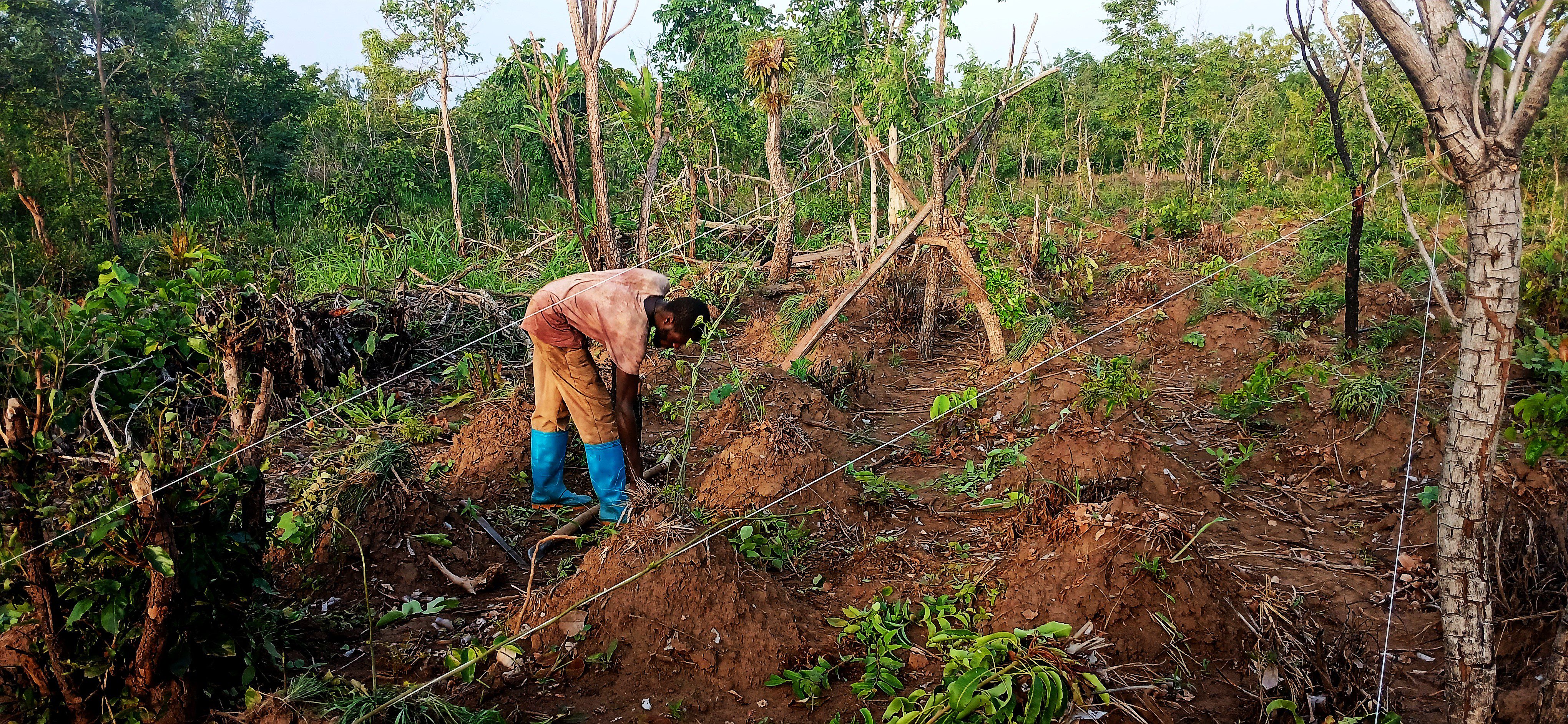
Through our restoration programming, including the RECLAIM — Restoring Ecosystems & Communities through Landscape Restoration, Agroforestry and Inclusive Management — programme, GetCare is developing approaches that combine ecological restoration with productive and resilient rural landscapes.
Our work is designed to support restoration of degraded lands, agroforestry, natural regeneration, improved land management and the protection of ecologically important areas.
2. Biodiversity Conservation
We are strengthening biodiversity considerations within our landscape programming by identifying important habitats, ecological corridors, threatened species, pressures on ecosystems and opportunities for community-led conservation.
This means moving beyond tree planting alone toward understanding what ecosystems are being restored, which species depend on them, what threatens those species and how ecological functionality can be maintained over time.
3. Sustainable Agriculture and Agroforestry
Agricultural landscapes can either accelerate biodiversity loss or become part of the solution.
GetCare promotes approaches that seek to improve agricultural productivity while reducing pressure on natural ecosystems through climate-smart agriculture, agroforestry, improved land management, soil restoration and more resilient production systems.
4. Community-Led Conservation
Communities are not peripheral actors in conservation.
They are among its most important long-term custodians.
GetCare works with farmers, traditional authorities, local institutions, women, young people and community organisations to develop approaches in which environmental stewardship is connected to tangible livelihood and economic opportunities.
5. Science, Partnerships and Evidence
The complexity of biodiversity loss requires collaboration.
GetCare is building partnerships across research institutions, conservation organisations, government agencies, communities, development organisations, universities and the private sector to connect scientific knowledge with field implementation.
Our ambition is to ensure that conservation interventions are informed by evidence, measurable over time and capable of being scaled.
From Protecting Species to Restoring Landscapes
Saving threatened species requires more than protecting the individual animal.
It requires protecting and restoring the ecological system that allows that species to survive.
For a forest elephant, that means functioning forests, connected habitats, reduced poaching, appropriate land-use planning and communities that can derive sustainable livelihoods without progressively destroying the ecosystem.
For pollinators, it means diverse vegetation and reduced ecological disturbance.
For aquatic species, it means functioning watersheds and healthy rivers.
For threatened plants, birds, mammals and amphibians, it means maintaining the ecological relationships upon which their survival depends.
This is why GetCare's conservation philosophy increasingly works from:
Species → Habitats → Landscapes → Communities → Livelihoods → Long-term ecological resilience.
Species → Habitats → Landscapes → Communities → Livelihoods → Long-term ecological resilience.
Each element reinforces the others.
Our Commitment
GetCare Foundation believes Africa does not have to choose between economic development and ecological protection.
The continent can pursue agricultural transformation, rural prosperity and infrastructure development while conserving the natural systems upon which long-term development ultimately depends.
Achieving this will require better land-use planning, stronger scientific evidence, innovative financing, responsible investment, community participation and partnerships capable of translating conservation commitments into action on the ground.
Our work will continue to connect these elements.
Because when a species disappears, we lose more than wildlife.
We lose part of the ecological infrastructure that keeps our landscapes functioning.
And when ecosystems collapse, communities ultimately bear the consequences.
Protect biodiversity.
Restore ecosystems.
Empower communities.
Secure our future.
Together, we can act now.