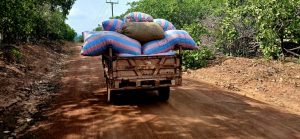
GetCare Foundation has formally deployed the Farming Against Hunger and Poverty (FAHAP) Program as its agricultural production and market systems arm under the Rural Economic Transition System (RETS), marking a major step toward strengthening food systems, expanding market access, and improving rural livelihoods across Ghana.
FAHAP is designed as a large-scale, integrated agricultural development program that addresses some of the most persistent constraints facing smallholder farmers in Sub-Saharan Africa: low productivity, weak extension support, limited access to quality inputs, fragmented market systems, and chronic underinvestment in rural value chains.
Why FAHAP Matters
Across many parts of Sub-Saharan Africa and other developing regions, smallholder farmers remain central to food production, yet they often operate within informal and under-capitalised systems that limit growth and reduce resilience. Even where production potential is strong, farmers face persistent constraints, including weak agronomic practices, limited farmer organization, inadequate post-harvest systems, restricted access to finance, and unreliable access to remunerative markets.
FAHAP was developed to address these structural challenges through a coordinated, systems-based approach that combines productivity improvement, farmer organization, market activation, and long-term livelihood strengthening within a single implementation model.
A Systems-Based Program for Agricultural Transition
FAHAP operationalises RETS within the agricultural sector by deploying a set of integrated interventions that move farming communities from vulnerable, survival-oriented production systems toward more structured, market-linked, and resilient local economies.
The program focuses on four core areas:
1. Farmer Productivity and Production Stabilisation
FAHAP supports farmers with training in good agricultural practices, climate-smart production methods, and practical farm management strategies to improve yields, reduce losses, and strengthen resilience.2. Access to Inputs and Farm Services
The program facilitates access to essential agricultural inputs such as improved seeds, planting materials, farm tools, and selected productivity-enhancing services needed to support efficient production.3. Market Integration
FAHAP strengthens the connection between farmers and structured markets by supporting aggregation, buyer engagement, quality improvement, and value chain coordination to improve price realisation and reduce market uncertainty.4. Community Formalisation and Group Strengthening
The program organises farmers into cooperatives, producer groups, and other functional local structures that improve coordination, bargaining power, access to services, and long-term growth.A Context-Driven, Multi-Value Chain Approach
FAHAP is designed as a flexible, multi-country program that adapts to the specific agricultural systems, ecological conditions, and market opportunities within each region of implementation.
Rather than being limited to a fixed set of crops, FAHAP works across a broad range of value chains depending on local context. These may include:
- tree crops
- cereals such as maize, rice, millet, and sorghum
- legumes
- tuber crops
- vegetables
Scale and Geographic Focus
FAHAP is designed for phased expansion across multiple regions and countries, with an initial implementation focus in Ghana. The program aims to reach 150,000 smallholder farmers in Ghana by 2030 through a structured scale-up strategy.
Current and planned areas of implementation include Bono, Northern, Upper East, Upper West, and Western Regions, with further expansion expected as partnerships and operational capacity grow.
Phase One Deployment: Bono Region
The initial deployment of FAHAP commenced in the Bono Region, where over 1000 farmers, including women and youth, were registered as part of the program rollout.
- farmer mobilisation and registration
- baseline assessments
- early-stage group formation
- preparation for training, input access, and market integration
The systems established during this phase will inform scaling into additional regions.
The FAHAP Financing Model
FAHAP is structured as a blended financing program that combines catalytic grant support with market-linked mechanisms to enable both scale and long-term sustainability. In its early stages, grant and philanthropic capital play a critical role in financing foundational activities such as farmer mobilisation, training, cooperative formation, and system development. This initial layer of support is essential for de-risking engagement in underserved rural communities and building the institutional and operational structures required for effective program delivery.
As the program expands, FAHAP leverages strategic partnerships with development agencies, technical institutions, and public-sector actors to strengthen implementation, enhance knowledge systems, and support regional scale-up. These partnerships provide both financial and non-financial resources, enabling the program to integrate climate-smart agriculture, gender inclusion, and value chain development into a cohesive and scalable model.
Over time, FAHAP is designed to increasingly anchor its sustainability in market-linked activities, including aggregation, structured buyer engagement, and value chain coordination. These mechanisms create pathways for revenue generation, private-sector participation, and catalytic investment into rural production systems, positioning FAHAP as both a development program and a practical entry point for long-term agricultural system investment.
Partnership and Investment Opportunity
FAHAP presents a strong opportunity for collaboration with development partners, donors, development finance institutions, agribusiness companies, and research institutions seeking to invest in food systems, rural livelihoods, and inclusive agricultural growth.
Through strategic partnerships, FAHAP aims to accelerate agricultural transformation, strengthen rural economies, and contribute to long-term food security and resilience.
Looking Ahead
As one of the core programs through which GetCare Foundation operationalises RETS framework, FAHAP will continue to serve as a long-term vehicle for agricultural transition, linking productivity, markets, and community systems into a unified model for sustainable rural transformation.